













Water Quality Testing at Home: 12 Parameters That Matter, Why They Affect Your Health & How to Test Each One
Water that looks clean tells you almost nothing. A glass of borewell water carrying 900 mg/L of dissolved salts looks exactly like a glass of RO water at 60 mg/L. Water with coliform bacteria in it looks exactly like water without. The contaminants that actually matter — bacteria, nitrate, fluoride, hardness, disinfection residue — are all invisible, tasteless or both.
That's the whole case for testing. Not paranoia, just measurement. This guide walks through every water quality parameter worth checking, what each one does to your body or your plumbing, what the safe limit is, and which kit measures it. Whether you're checking drinking water at home, running a society swimming pool, or keeping an aquarium alive, the parameters below cover it.

Why Water Testing Matters More Than You'd Think
- Treatment happens upstream; contamination happens downstream. Municipal water may leave the plant perfectly safe and pick up bacteria in an unclean overhead tank, or iron and lead from corroded pipes, before it reaches your tap.
- RO systems fail silently. A membrane past its life still produces water. It just stops removing much. Without a TDS check you have no way of knowing.
- Borewell water changes with the seasons. Nitrate and hardness levels shift after monsoon recharge and during summer drawdown.
- Tanker water is a black box. You have no idea what source it came from.
- Different water has different risks. Pool water needs disinfection control; aquarium water needs ammonia control; drinking water needs both microbiological and chemical safety.
- You can't correct what you haven't measured. Buying a softener without knowing your hardness, or dosing chlorine without knowing your residual, is guesswork.
- India's benchmark for drinking water is IS 10500 (BIS), which sets an acceptable limit and, for some parameters, a permissible limit where no alternate source exists. The figures below follow it. Verify against the current BIS document before acting on any borderline result.
Quick Reference: Water Quality Parameters at a Glance
| Parameter | Acceptable limit (drinking) | Why it matters | Test with |
|---|---|---|---|
| pH | 6.5 – 8.5 | Corrosion, taste, disinfection efficiency | pH & ORP Test Kit |
| TDS | 500 mg/L | Taste, mineral load, RO performance | TDS meter |
| Total hardness | 200 mg/L as CaCO₃ | Scaling, appliance life, soap use | Hardness Kit AE211 |
| Free chlorine | min 0.2 mg/L residual | Disinfection vs. by-products | Aquasol Chlorine Strips |
| Total alkalinity | — (buffering indicator) | pH stability | 16-in-1 Strips |
| Nitrate | 45 mg/L | Infant methaemoglobinaemia | 16-in-1 Strips |
| Nitrite | — (screen alongside nitrate) | Same pathway as nitrate | 16-in-1 Strips |
| Coliform bacteria | Absent in 100 ml | Diarrhoea, typhoid, cholera | CHEKnSEE Potability Kit |
| Fluoride | 1.0 mg/L | Dental and skeletal fluorosis | Fluoride kit AE210 |
| Iron | 0.3 mg/L | Staining, metallic taste | Dedicated iron kit |
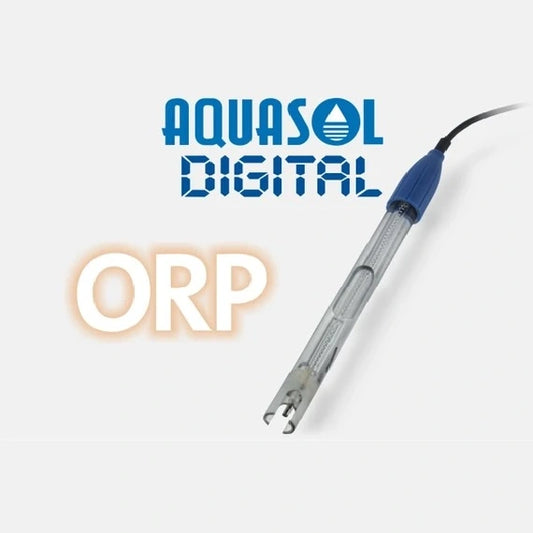
| ORP | Context-dependent | Disinfection power, antioxidant claims | pH & ORP Test Kit |
| Ammonia (tanks) | as close to 0 as possible | Lethal to fish | Bionix Freshwater Kit |
Group A — Drinking Water: The Core Parameters
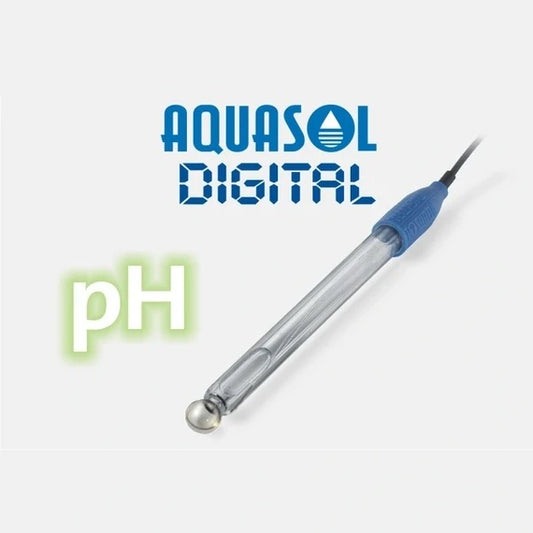
1. pH — The Master Variable
What it is: pH measures how acidic or alkaline water is on a scale of 0 to 14, where 7 is neutral. It's logarithmic, so pH 5 water is ten times more acidic than pH 6.
Acceptable range: 6.5 – 8.5.
Why it matters for you: pH rarely harms you directly at drinking-water levels, but it controls almost everything else. Water below 6.5 is corrosive and leaches copper, iron and lead out of your plumbing into the water you drink — this is how lead contamination usually happens. Water above 8.5 tastes soapy or bitter, scales up appliances, and makes chlorine disinfection dramatically less effective. A pH reading is the first thing that tells you whether other test results even make sense.
Common causes of a bad reading: borewell water passing through limestone, industrial discharge, over-treated alkaline water, RO water that has been stripped of buffering minerals.
Test it with: the BIONIX pH & ORP Test Kit — ₹230, ISO 9001:2015 certified and IAF accredited, with a 500-test capacity and a measuring range of pH 1.0 to 11. Add a few drops of reagent to a water sample in the supplied glass tube and match the colour against the reference card. The manual ships in 12 Indian languages with a QR-linked video guide, which makes it practical for staff or family members who aren't technically trained.
2. TDS — Total Dissolved Solids
What it is: the combined weight of everything dissolved in your water — calcium, magnesium, sodium, chloride, sulphate, nitrate, trace metals. Measured in mg/L or ppm.
Acceptable limit: 500 mg/L, with a permissible ceiling of 2,000 mg/L where no better source exists.
Why it matters for you: TDS is a blunt instrument that is nonetheless the single most useful routine number you can track. High TDS means salty or bitter taste, higher sodium load (relevant if you have hypertension), and faster scaling. But TDS doesn't distinguish harmless calcium from harmful nitrate — 400 mg/L of dissolved limestone and 400 mg/L of industrial salts read identically. Very low TDS isn't automatically better either; water below roughly 50 mg/L tastes flat and contributes no dietary minerals.
Its real value is as a trend line. If your RO output reads 45 mg/L in January and 210 mg/L in June, the membrane is finished. That's a diagnosis you can't get any other way.
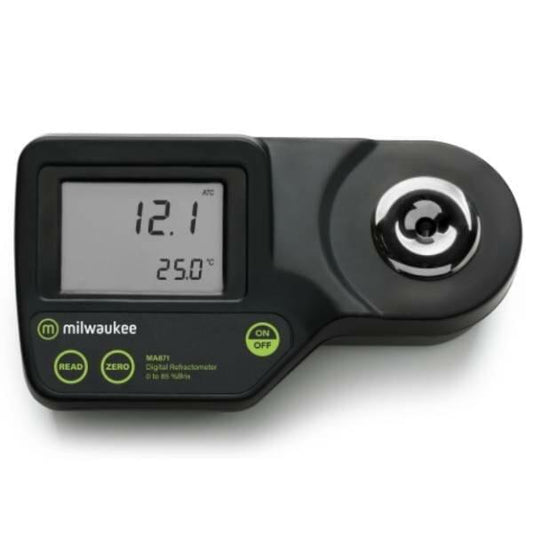
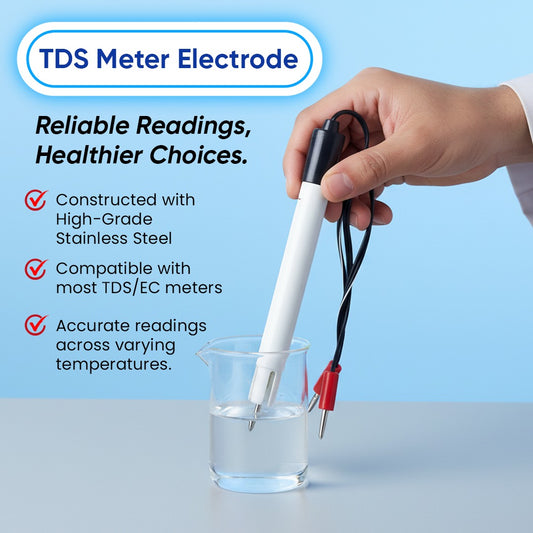
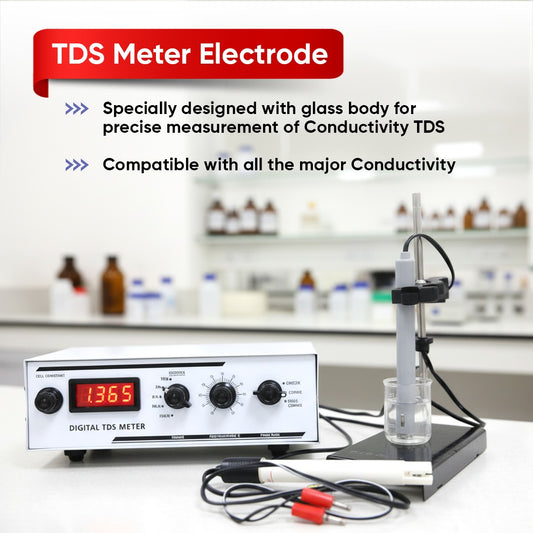
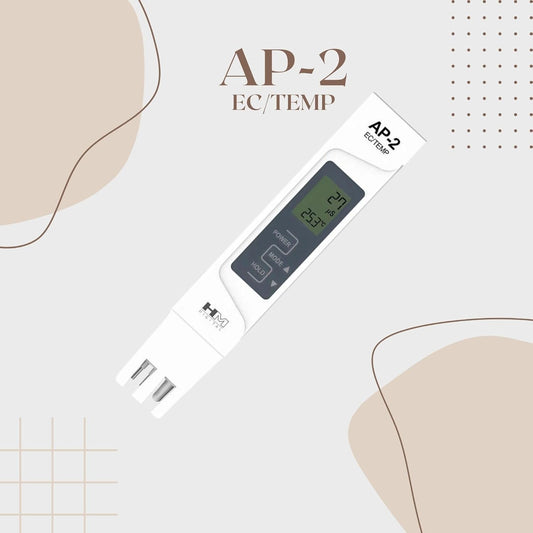
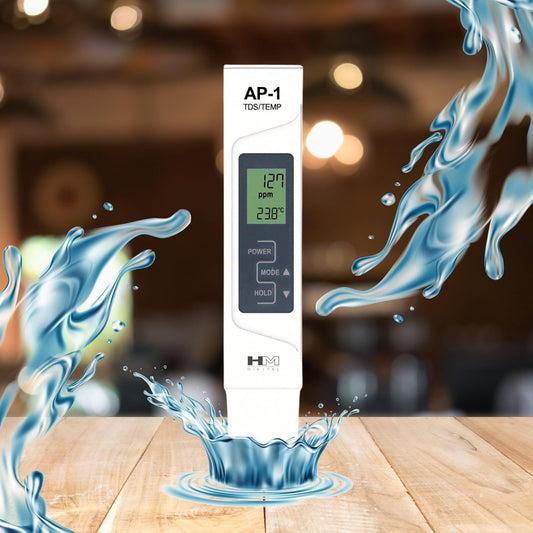
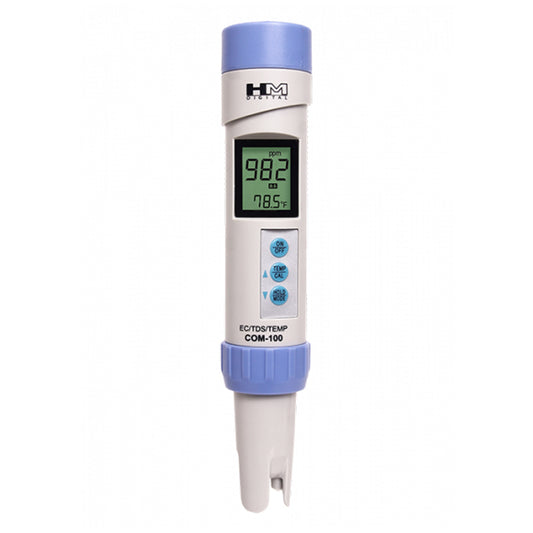
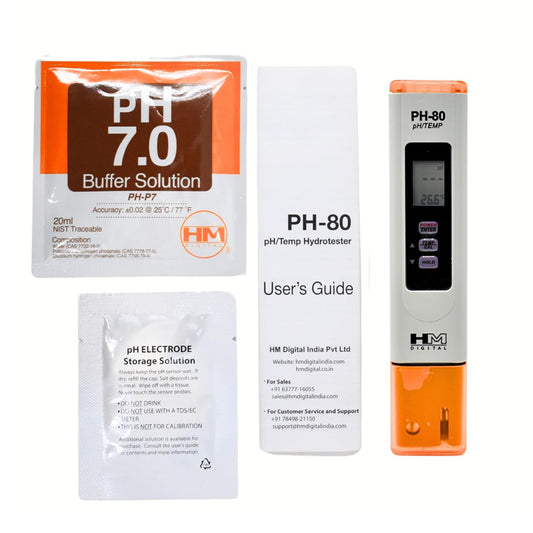
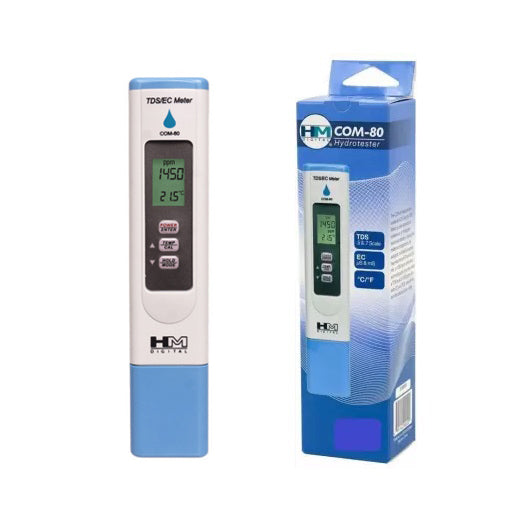
Test it with: a digital TDS meter — browse the TDS meter range. Dip, wait for the reading to stabilise, log it.
3. Total Hardness — Calcium and Magnesium
What it is: the concentration of dissolved calcium and magnesium ions, expressed as mg/L of calcium carbonate (CaCO₃). Hard water forms when groundwater moves through limestone and chalk deposits, dissolving those minerals along the way.
Acceptable limit: 200 mg/L as CaCO₃; permissible up to 600 mg/L.
Why it matters for you: hardness is not a direct health hazard — the calcium and magnesium are the same minerals you eat. The damage is practical and expensive. Hard water leaves scale inside geysers, kettles, washing machines and pipe interiors, cutting heating efficiency and shortening equipment life by years. It reacts with soap to form scum instead of lather, so you use more detergent and shampoo, and it leaves a film on skin and hair that many people experience as dryness or irritation. Above roughly 300 mg/L most households notice the difference immediately.
Hardness is also the number that decides whether a water softener is worth installing, and how to size it. Buying one without measuring first is guesswork.
Test it with: the Total HardWater Test Kit AE211 (CaCO₃) — ₹749. It's a titration-based field kit with dual ranges of 2–40 ppm and 25–500 ppm, delivering 250 tests, built to APHA, AWWA and IS standards and housed in a portable plastic carry case. The dual range matters: the low range resolves soft water and RO output precisely, while the high range covers untreated borewell supply. Manual and MSDS are downloadable from the product page.
4. Chlorine — Free and Total
What it is: chlorine is the disinfectant most Indian municipal supplies rely on. Free chlorine is the portion still available to kill pathogens. Total chlorine includes chloramines — chlorine that has already reacted with organic matter and is largely spent.
Acceptable level: a minimum residual of 0.2 mg/L at the point of delivery; BIS sets an acceptable limit of 0.2 mg/L with a permissible level of 1.0 mg/L.
Why it matters for you: this parameter fails in both directions. Too little and there is nothing left to stop bacterial regrowth in your pipes and storage tank — the disinfection has effectively ended before the water reached you. Too much and you get the chemical taste and smell people complain about, plus the formation of disinfection by-products such as trihalomethanes, which are regulated because of long-term health concerns.
Chlorine is also volatile. A sample that reads 0.8 mg/L at the tap may read near zero after sitting in an open jug for an hour, which is exactly why you test at the point of use and test promptly.
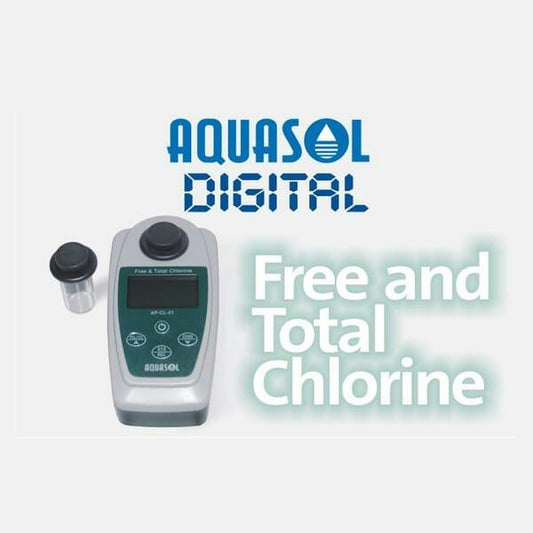
Test it with: Aquasol Chlorine Test Strips — ₹306.80 for 100 strips, covering 0–10 ppm. Dip for 1–2 seconds, shake off the excess, wait 30–60 seconds out of direct sunlight, and match against the chart. The wide range makes them equally suitable for drinking water, pools, spas, cooling towers and water treatment plants. Store them capped in a cool, dry place — humidity is what kills test strips.
5. Nitrate, Nitrite and Alkalinity
What they are: nitrate (NO₃⁻) and nitrite (NO₂⁻) are nitrogen compounds that enter groundwater from agricultural fertiliser, septic leakage and sewage. Total alkalinity measures water's capacity to resist pH change.
Acceptable limit: nitrate 45 mg/L.
Why it matters for you: nitrate is the parameter most people have never heard of and most need to check if they draw from a borewell in an agricultural area. In the body, nitrate converts to nitrite, which interferes with the blood's ability to carry oxygen. In infants under six months this causes methaemoglobinaemia — "blue baby syndrome" — which is why nitrate is a genuine emergency parameter for households with a new baby mixing formula with tap or well water. Nitrate is colourless, odourless and completely unaffected by boiling. In fact, boiling concentrates it.
Alkalinity is the quiet stabiliser. Low-alkalinity water swings wildly in pH with tiny chemical additions; adequate alkalinity holds it steady.
Test them with: the 16 in 1 Drinking Water Test Strips — ₹1,250. One strip covers pH, free chlorine, total chlorine, total hardness, total alkalinity and nitrite/nitrate in under 60 seconds. Dip for 2–3 seconds, hold horizontally, wait 15–60 seconds and compare to the chart on the bottle. This is the right first purchase for anyone who wants a broad chemical snapshot of their water before deciding which single parameter needs a dedicated, precise kit. It's a screening tool, not a lab substitute.
6. Bacteriological Safety — Coliform
What it is: coliform bacteria are found in sewage and in the intestines of humans and animals. They aren't all dangerous themselves, but they're the standard indicator organism: if coliform is present, the water has had contact with faecal contamination, and genuinely dangerous pathogens may be present too.
Acceptable limit: absent in 100 ml. There is no safe non-zero level.
Why it matters for you: this is the parameter that actually kills people. Bacterially contaminated water causes diarrhoea, dysentery, typhoid, paratyphoid, gastroenteritis and cholera. Unlike chemical contaminants, which cause harm over years, microbiological contamination makes people sick within days. And unlike hardness or TDS, it can appear suddenly — after a pipeline repair, a monsoon flooding event, a cracked underground tank, or an overdue purifier filter change.
Historically this required a microbiologist, a sterile lab and an incubator, which is precisely why almost nobody tested for it.
Test it with: the CHEKnSEE Drinking Water Potability Test Kit (CNC2) — ₹380, manufactured by Rakiro Biotech Systems. Collect the sample in the supplied bottle, mix it with the pre-loaded media bud, and leave it somewhere warm for 18–24 hours. Purple means potable. Yellow means possible bacterial contamination — stop drinking it. No lab, no incubator, no technical training required. It works on tap water, RO and UV purifier outlets, overhead and underground tanks, borewells, coolers, dispensers, rivers, ponds and springs.
Run it after purifier servicing, after tank cleaning, after plumbing work, after any monsoon flooding, and when moving into a new home. It's a screening test — a yellow result means switch sources immediately and get confirmatory testing from an accredited laboratory.
7. Fluoride, Iron and Other Specifics
Fluoride is a natural groundwater constituent across large parts of Rajasthan, Gujarat, Andhra Pradesh, Telangana and Karnataka. The acceptable limit is 1.0 mg/L. Below roughly 0.5 mg/L you see more dental decay; above the limit you get dental fluorosis (mottled, stained teeth) and, with prolonged exposure at higher levels, skeletal fluorosis affecting bones and joints. It's irreversible, which is why fluoride testing matters most in the regions where it's naturally high. Use the Aquasol Fluoride Test Kit AE210.
Iron has an acceptable limit of 0.3 mg/L. Above it you get rust-coloured staining on laundry and sanitaryware, a metallic taste, and iron bacteria that form slime in tanks and pipes. It's an aesthetic and maintenance problem more than an acute health one, but it's a strong indicator that your pipes are corroding — which brings you back to pH.
Sulphate causes a laxative effect at elevated levels and a bitter taste; check it with the AE219 Aquasol Sulphate Test Kit.
Group B — Swimming Pool Water
Pool chemistry is a different problem from drinking water. Nobody drinks the pool, but everybody's eyes, skin and lungs are in sustained contact with it, and the water is continuously reinoculated with sweat, sunscreen, skin cells and worse by every swimmer.
The two numbers that matter, and how they interact:
Free chlorine should sit around 1–3 ppm for a residential pool. Below 1 ppm, algae and bacteria establish quickly. Above 5 ppm you get irritation.
pH should sit at 7.2–7.6. This is the part most pool owners get wrong, because pH controls how well your chlorine works. At pH 7.2, chlorine is highly active. By pH 8.0, most of that same chlorine has converted to a far weaker form. You can hold a perfect chlorine reading and still have an under-disinfected pool purely because pH drifted.
The chloramine misunderstanding: that sharp "chlorine smell" and the stinging red eyes are not signs of too much chlorine. They're signs of chloramines — chlorine already consumed by organic contaminants. A properly maintained pool smells of almost nothing. The counterintuitive fix is usually more free chlorine, not less.
Test it with: the BIONIX Swimming Pool Test Kit for pH & Chlorine — ₹299, ISO 9001:2015 certified and IAF accredited, delivering over 200 tests: 100 pH tests across low and high ranges, and 100 chlorine and bromine tests. The box contains 2 reagent bottles, 3 test tubes, 2 colour cards, a syringe and a manual, with a QR code linking to video instructions. It's manufactured in India under the supervision of aquaculture scientists, and it covers pools, water parks, hot tubs, spas and fish pedicure tanks.
Test daily during heavy-use season, and always before the first swim of the day.
Group C — Aquarium and Freshwater
Fish rarely die from dirty-looking water. They die from perfectly clear water with invisible chemistry gone wrong.
The nitrogen cycle, briefly: fish excrete ammonia. Beneficial bacteria convert it to nitrite, then other bacteria convert nitrite to the far less toxic nitrate, which you remove through water changes. In a new tank those bacteria colonies don't exist yet, so ammonia and nitrite spike — this is "new tank syndrome," and it kills more fish than any disease.
Ammonia is lethal at a fraction of a ppm, and it gets more toxic as pH rises. Target: zero.
Nitrite blocks oxygen transport in fish blood. Target: zero.
Nitrate is tolerable at low levels; rising nitrate means it's time for a water change.
pH stability matters more than any particular value. Fish adapt to a steady pH; they go into shock from a sudden swing.
Test it with: the Bionix Fresh Water Test Kit (200 Tests) — ₹895, covering pH, ammonia, nitrite and nitrate across roughly 200 individual tests. During tank cycling, test daily. Once established, weekly is enough.
For aquaculture at scale — biofloc, RAS, pond and hatchery operations — the BIONIX pH & ORP Kit is also suitable, and its 500-test capacity makes it economical for daily monitoring.
Group D — ORP, The Parameter Most Guides Skip
What it is: Oxidation Reduction Potential measures water's tendency to either oxidise or reduce other substances, expressed in millivolts. Positive ORP means the water is oxidising; negative ORP means reducing.
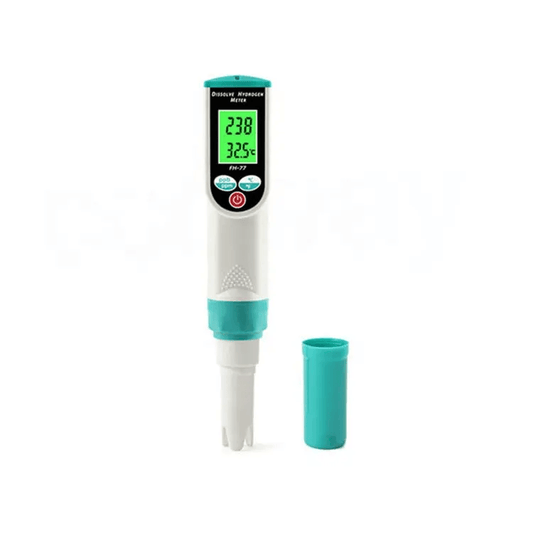
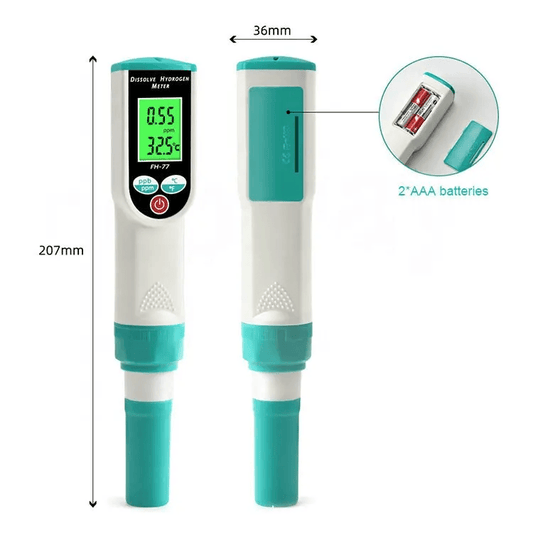
Why it matters: ORP is the direct measure of disinfection power. Chlorine concentration tells you how much disinfectant is present; ORP tells you how hard it's actually working. In professional pool and water treatment management, ORP is the control parameter of choice because it accounts for pH, temperature and organic load simultaneously. It's also central to claims made about alkaline and hydrogen-rich drinking water, where negative ORP is marketed as an antioxidant property — a claim worth evaluating on the evidence rather than the marketing, but one you can at least verify the underlying measurement of.
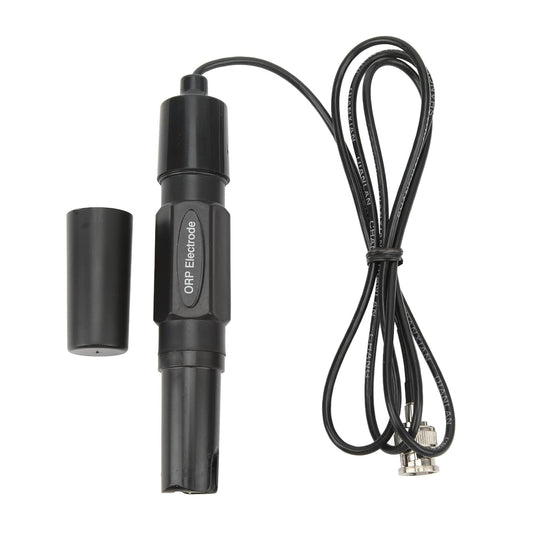
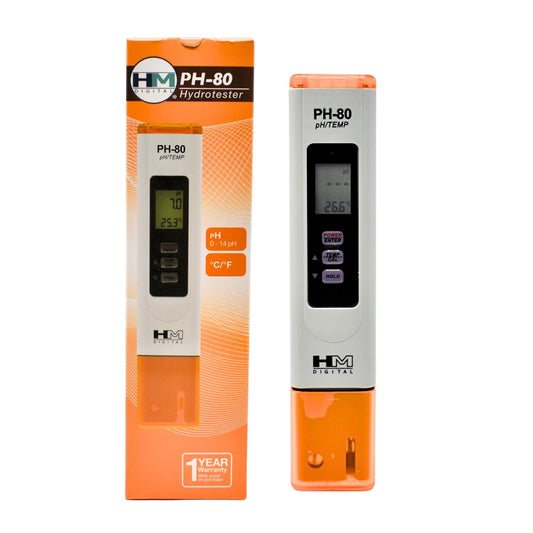
Test it with: the BIONIX pH & ORP Test Kit. The ORP indication is deliberately simple — a colour change to pink indicates negative ORP; no colour change indicates positive ORP — which makes it a fast screening check rather than a millivolt readout. For numeric ORP values, use a digital ORP meter.
Which Water Test Kit Do You Actually Need?
| Your situation | Test for | Recommended kit |
|---|---|---|
| Moved into a new home | Bacteria + chemical baseline | CHEKnSEE + 16-in-1 Strips |
| Borewell or well water | Bacteria, hardness, nitrate, fluoride | CHEKnSEE + AE211 + fluoride kit |
| Checking if the RO still works | TDS, pH | TDS meter + pH & ORP Kit |
| After tank cleaning or plumbing work | Coliform bacteria | CHEKnSEE Potability Kit |
| Scale on taps, poor lather | Total hardness | Hardness Kit AE211 |
| Chemical smell or taste in tap water | Free and total chlorine | Aquasol Chlorine Strips |
| Home or society swimming pool | pH + free chlorine | BIONIX Pool Test Kit |
| Aquarium or fish pond | Ammonia, nitrite, nitrate, pH | Bionix Freshwater Kit |
| Biofloc, RAS, hydroponics | pH + ORP, high volume | BIONIX pH & ORP Kit |
| General curiosity, broad snapshot | Six parameters at once | 16-in-1 Strips |
How to Test Water Correctly
- Bad sampling produces bad data, and bad data is worse than no data because you act on it.
- Flush the line first. Run the tap for two minutes before sampling, unless you are specifically testing for what has been sitting in the pipes overnight — in which case do the opposite and note it.
- Use a clean container and don't touch the inside rim.
- Test at the point of use, not just at the source. The tap you drink from is the tap that matters.
- Test promptly. Chlorine dissipates. pH drifts. Bacteria multiply.
- Note the temperature. Most colorimetric tests are calibrated for room temperature.
- Keep strips capped and dry. Leave the desiccant packet in the bottle, and never use expired strips.
- Log every result with date, source and value. One reading is a data point; twelve readings are a diagnosis.
- Testing frequency: drinking water chemistry monthly; bacteria quarterly and after any disruption; pools daily in season; new aquariums daily until cycled, then weekly.
- Strips vs. reagent kits vs. meters: strips are fast, cheap and semi-quantitative — perfect for routine screening across many parameters. Reagent titration kits like the AE211 are slower but far more precise for a single parameter. Digital meters give exact numbers for pH, TDS and ORP but need periodic calibration.
When to Escalate to a Laboratory
Field kits are screening tools. They are excellent at telling you whether something needs attention, and they are not a substitute for accredited analysis. Send water to an NABL-accredited laboratory when:
- A potability test comes back positive and you need confirmation
- You need results for a legal dispute, a property transaction, or regulatory compliance
- You suspect heavy metals — lead, arsenic, chromium, cadmium — which field strips do not reliably detect
- You need pesticide or industrial solvent screening
- Someone in the household has developed symptoms you suspect are water-related
- Being clear about this boundary is how you use test kits well: they tell you when to spend money on a lab, so you don't spend it blindly.
Frequently Asked Questions
Q1. How often should I test my drinking water?
Chemical parameters monthly, bacteriological quarterly. Test additionally after purifier servicing, tank cleaning, plumbing work, monsoon flooding, or any change in taste, smell or colour.
Q2. What is a safe TDS level for drinking water?
BIS sets the acceptable limit at 500 mg/L, permissible up to 2,000 mg/L where no alternative exists. Most people find 100–300 mg/L tastes best. Below 50 mg/L water tastes flat.
Q3. Can I really test water quality at home without a lab?
Yes, for screening. The CHEKnSEE kit detects coliform bacteria with no incubator and no lab, in 18–24 hours. Chemical parameters are covered by strips and reagent kits. Confirmatory and heavy-metal analysis still needs an accredited lab.
Q4. What's the difference between test strips and a reagent test kit?
Strips are dip-and-compare, take under a minute, cover several parameters at once, and give a semi-quantitative reading. Reagent kits like the AE211 use titration for one parameter with far greater precision. Use strips to screen, reagent kits to measure.
Q5. Does boiling water make it safe?
Boiling kills bacteria, viruses and protozoa. It does nothing for dissolved chemicals — and because water evaporates, boiling actually concentrates nitrate, fluoride, hardness and heavy metals. Boiling is not a substitute for chemical testing.
Q6. What pH should swimming pool water be?
7.2 to 7.6. Above 7.8, chlorine loses most of its disinfecting power even when the chlorine reading itself looks fine.
Q7. My aquarium water is crystal clear but my fish keep dying. Why?
Almost certainly ammonia or nitrite. Both are invisible and both are lethal well below the level at which water looks anything but perfect. Test with the Bionix Freshwater Kit before treating for disease.
Q8. What is ORP and should I care about it?
ORP measures how strongly water oxidises or reduces, in millivolts. It's the truest indicator of disinfection effectiveness, and it's the number behind negative-ORP claims for alkaline and hydrogen water. The BIONIX kit gives a simple positive/negative indication; a digital ORP meter gives values.
Q9. Does an RO system remove everything?
No. RO removes most dissolved solids but performance drops as the membrane ages, and it doesn't reliably handle every contaminant. A TDS check on the output is the fastest way to confirm your system is still working. Test the purifier outlet for bacteria too — contamination can occur after the membrane.
Q10. Which single kit covers the most parameters?
The 16 in 1 Drinking Water Test Strips give you the broadest chemical screen in one dip. Pair them with the CHEKnSEE kit, because strips cannot detect bacteria.
Q11. Are test strips accurate?
Accurate enough for routine monitoring and trend-tracking, which is what most people need. They are semi-quantitative by design. Use a reagent kit or a meter where precision matters, and a lab where the result carries legal or medical weight.
Q12. What is the BIS limit for drinking water in India?
IS 10500 covers dozens of parameters. Key acceptable limits: pH 6.5–8.5, TDS 500 mg/L, total hardness 200 mg/L, nitrate 45 mg/L, fluoride 1.0 mg/L, iron 0.3 mg/L, and coliform absent in 100 ml.
Start With the Parameter That Matters Most to You
You don't need every kit. You need the one that answers the question you actually have. Scaling taps means hardness. A new baby and a borewell means nitrate. A recent tank cleaning means bacteria. A green pool means pH before chlorine.
Browse the full range of water testing kits at Uniglobal Business — a scientific instrument importer and distributor supplying households, laboratories, aquaculture operations, hotels and industry across India. Call 9278-333-555 for guidance on which kit fits your water, or for bulk and institutional enquiries.
